
(Original Article in Chinese 童年和玩伴, English Translation)
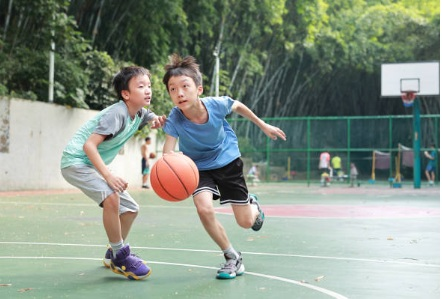
(Test version) Recently, I went to Johor Bahru to attend the wedding of my cousin’s youngest son. This cousin is only a few months older than me. At the banquet, the two of them were chatting about their two mischievous grandsons—their daily routines, and how addicted they are to 3C (computer, communication, consumer electronics) products. Inevitably, that got us reminiscing about our childhood—a time without electronics, when toys were whatever we could find nearby, simple and ready at hand, and life was carefree.
During the school holidays, my cheerful and lively aunt—whose voice always arrived before she did—would bring her two sons (my cousins, less than a year apart in age from me) on a journey of two to three hours, transferring between three buses from faraway Gemas to visit her aunt—my mother—in our rural home. The two women would chat nonstop while doing household chores. The next day, my aunt would head back, leaving my two cousins with us to spend the rest of the holidays in the village. My nephew, who was about my age, often joined us too when he wasn’t following my mother to Kemaman to sell chicken rice. Together, we would roam the countryside for fun.
They were like Sun Wukong freed from the tightening curse of his magical headband, leading me—the only girl in the gang—on wild adventures: climbing trees to pick fruit, catching fish in small streams, prying insects out of crevices in tall rubber trees meant for smoking latex, playing hide-and-seek among the tree trunks, kicking a football in the backyard…
After the rain, the water tank that originally collected rainwater for various uses in processing rubber sheets would transform into our “swimming pool.” My mother, who never went to school, had a clever trick: she would heat a metal rod over the charcoal stove until it was glowing red-hot, then grip it with iron tongs and plunge it into the tank. This would quickly warm the rainwater to prevent us from catching a chill. We had never even heard of a public swimming pool back then, let alone seen one. That small pool—about the size of two or three bathtubs, and less than a meter deep—was our little paradise. We couldn’t swim, so we’d paddle with our hands a few strokes to reach the other side, then pinch our noses and compete to see who could hold their breath underwater the longest.
I still remember that during one of the long holidays, my mother would squat on the floor, pounding chilies in a stone mortar, adding lemongrass and shallots, and then frying up her signature Nyonya-style sambal lemongrass chicken. She would serve it with a plate of fried jindanmian (egg noodles) with no fancy ingredients. That was our rare and special “afternoon tea.” We enjoyed it with extra relish because it was just for us—no need to worry about our six older brothers and sisters not having their share.
Of course, childhood playmates wouldn’t be complete without Aunty Wong’s daughter, who—just like her delicate and graceful name—always brought me along for “refined” games. We would use clean seashells as bowls and plates, pick wild roadside grass as “dishes,” and pretend to feed a slightly damaged doll as our “baby,” playing “Masak” (Playing house). Our friendship, like that of our mothers, has flowed steadily through the decades.
Years later, I sometimes wonder—was that “luxurious” afternoon tea because my birthday was in November, or was it simply a special treat for my visiting cousins and nephew? In those days, no one celebrated children’s birthdays—such occasions were a privilege reserved for the elderly. Perhaps what I truly miss is my mother’s unique cooking, even though it was so spicy we’d take one tiny bite of chicken and then gulp down a big mouthful of water. That’s probably how we gradually became chili champions.
Speaking of meals, I remember a funny Hainanese-language joke. Before every meal, my older cousin, a few years my senior, would always call out, “Guzhang (Uncle, meaning my father), time to eat!” My father would reply in Hainanese, “Jia Qau Tai” (eat first). But my cousin always misheard it as “Jia Qui Tai” (eat chicken manure) and kept wondering why Uncle kept telling him to eat that! This hilarious misunderstanding lasted for quite a while, until one day my aunt jokingly explained it, and even now it still makes me laugh.
The roof over the kitchen was another of our childhood evening hideouts. We would climb over the low iron-grille wall, scramble onto the roof, and lie there gazing at the open sky full of bright stars. We’d chat across the rooftop about our childhood troubles—storylines from Long Hu Men comics, Doraemon’s magical gadgets, never having enough pocket money to buy prawn crackers, annoying Malay teachers, endless homework, barely passing math…
Sometimes my elder brother, four years older than me, would lead us in singing popular school songs of the time as we looked at the moon: “Lan Hua Cao,” “Baba De Caoxie,” “Wo Niu Yi Huang Li Naio”,,” and “Long De Chuan Ren”, … At night, we’d sneak in little adventures while the adults weren’t paying attention.
Now, my cousins are gradually enjoying the days of playing with their grandchildren, while I’m still busy discussing my children’s careers, further studies, and other everyday matters. We all share a beautiful childhood memory, having lived through the transformation from small villages to big cities, from simple living to bustling prosperity, from power cuts to 24/7 electricity, from typewriters to laptops, from black-and-white TVs to everyone owning a smartphone, from coal stoves to electric cookers. Every one of these changes is a piece of our shared history of an era in motion.
As I write this, it feels as if I’ve walked that childhood road once more. Along the way, I’ve had the chance to look back, reflect, and rediscover my own place and purpose. I’m also grateful to Singapore for offering courses specially designed for the silver-haired generation, helping us adapt to a fast-changing world while still living a meaningful.
李吉美
仍在营销和财务职场与数字打交道,工作中琢磨着怎么提高营业额。工作之外,还是免不了为生活, 家人和孩子琐碎事操心。正在学习放慢脚步,做些自己喜欢的事情。追求平淡生活,向往时间,财务和思想的自由,同时也寻求新的生活平衡.